Bryan Kohberger’s potential Idaho murders ‘party house’ defense could make for ‘completely different trial’: documentary
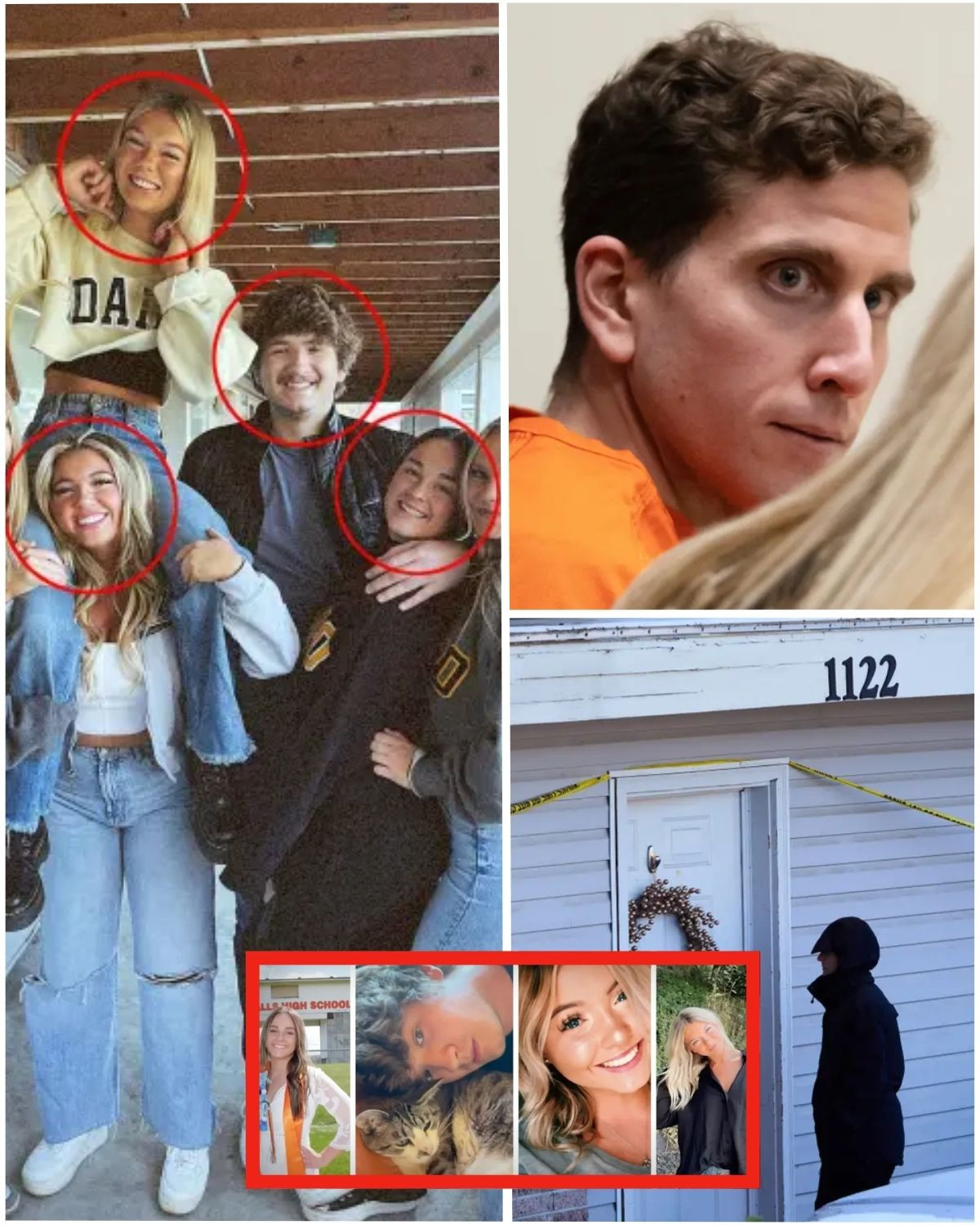 Bryan Kohberger could use the “party house” status of the grisly murder scene in Moscow, Idaho, where he is accused of killing four students to explain why his DNA was found there, a new documentary reveals.
Criminal Defense Attorney Jack Rice says the alleged killer’s team could use the fact the off-campus house was a place where wild parties attended by scores of college students were held to his advantage.
“One of the most important parts of this case is that DNA, and what we know is that this is a party house,” Rice said in a clip, exclusively obtained by The Post.
“We know that there are hundreds of kids in this house – it could have even included him. And the thing is, if he was in this house, are you suggesting that these four know everybody whose been there? I doubt that.
“All of sudden, you might have a completely different trial,” he said in the “The Case Against Bryan Kohberger” documentary, which airs on Court TV Sunday.
A knife sheath which was later found to have Kohberger’s DNA on it was found by police alongside the bodies of Kaylee Goncalves, Madison Mogen, Xana Kernodle and her boyfriend Ethan Chapin on Nov. 13 last year.

Criminal Defense Attorney, Jack Rice, thinks Bryan Kohberger’s team might use that status against the State of Idaho’s defense to lay the groundwork as to why his DNA was found inside the murder scene.AP

The home Kaylee Goncalves, Madison Mogen, Xana Kernodle, and Kernodle’s boyfriend, Ethan Chapin, were found dead in on Nov. 13 was known to be a “party house,” with hundreds of students constantly coming in and out.James Keivom

An aerial view of the home where the murders occurred.Youtube/CourtTV
Kohberger’s defense team could use the victims’ inability to keep tabs on who’s who to plant a theory that the criminology student’s DNA was brought into the home before the quadruple murder, Rice alleged.
Neighbor Jeremy Reagan confirmed to Court TV there were “constantly people in and out of the home.”
He said before the murders the partying had died down somewhat but wasn’t completely gone.
“They did have more stuff going on there, but they were definitely nowhere near as loud, as crazy,” Reagan said.

A knife sheath which was later found to have Kohberger’s DNA on it was found by police alongside the bodies of the victims.Youtube/CourtTV

Neighbor Jeremy Reagan confirmed that there were “constantly people in and out of the home” the second year he had lived nearby. However, he said before the murders, the partying had died down but wasn’t completely gone.

Three of the four victims lived at the home at 1122 King Road at the time Kohberger allegedly broke in and stabbed them to death.Youtube/CourtTV
Kohberger’s team hinted at having an alibi, but have yet to reveal to prosecutors and the public what that is.
“Evidence corroborating Mr. Kohberger being at a location other than the King Road address will be disclosed pursuant to discovery and evidentiary rules,” his attorney Anne Taylor wrote in July.
Three of the four victims lived at the home at 1122 King Road at the time Kohberger allegedly broke in and stabbed them to death.
Goncalves and Mogen, both 21, were found slain on the third floor of the home, while Chapin and Kernodle, both 20, were discovered on the second story.
Their two roommates, Bethany Funke and Dylan Mortensen, survived the attack unscathed.
Pennsylvania native Kohberger has attempted to have the case thrown out, but the judge denied it.
He is expected to go to trial later this month.